Why Choose Flour PP Woven Bags for Global Buyers?
Global flour buyers need packaging that protects product quality from the mill to the customer’s shelf. A Flour Pp Woven Bag offers a practical balance of strength, weight, and cost. Its woven polypropylene fabric can resist tearing during filling, stacking, and transport. This matters when bags face rough warehouse floors, crowded pallets, and long ocean routes.
Experienced packaging teams examine more than appearance. They check fabric density, bag dimensions, seam strength, liner fit, and print durability. A well-made bag should stand upright after filling and remain stable under repeated stacking. For common flour volumes, such as 25 or 50 kilograms, accurate sizing supports efficient pallet use. A suitable inner liner can also help reduce moisture exposure. Small details matter.
However, no bag is perfect. Flour quality, storage humidity, handling methods, and transport conditions all affect performance. Buyers should request samples and review technical data before placing large orders. Factory audits, production records, and quality inspections can provide useful evidence. Reliable suppliers should explain their materials clearly and respond to practical questions. They should also support packaging choices that match regional labeling and recycling requirements.
The right packaging supports more than safe delivery. It protects brand presentation, reduces avoidable product loss, and helps distributors work efficiently. Clear printing can show product information, batch details, and handling guidance. Strong handles are useful in some markets, but they may increase production costs. This trade-off deserves careful review. For global buyers, choosing a Flour Pp Woven Bag means matching verified performance with real shipping conditions, not simply selecting the lowest quotation.
What Are Flour PP Woven Bags and How Are They Made?
Why Choose Flour PP Woven Bags for Global Buyers?
What Are Flour PP Woven Bags and How Are They Made?
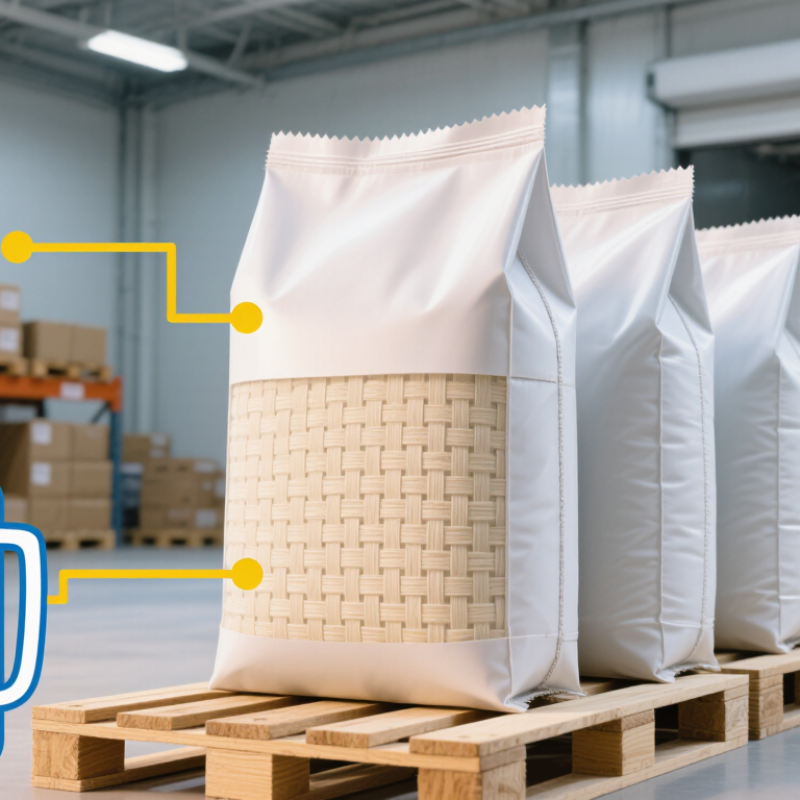
Flour PP woven bags are durable packaging containers made from polypropylene plastic tapes. They protect flour during filling, stacking, transport, and warehouse storage. The process begins with polypropylene resin, which is melted and extruded into thin flat tapes. These tapes are stretched for strength, then woven into fabric on circular looms. The finished fabric may receive a laminated coating for better moisture resistance.
Bag makers cut the fabric into panels and stitch the seams with industrial thread. Some bags include gussets, valve openings, or inner liners for cleaner filling. Flexographic printing can add handling information and product details. In quality checks, experienced manufacturers inspect tape strength, seam durability, dimensions, and bag weight. Testing should reflect actual shipping conditions, not only laboratory results. That point is often overlooked.
Tips: Ask for samples before placing a large order. Test the bags with your real flour, filling equipment, and stacking pattern. Check whether the fabric resists tearing at the corners. Confirm packaging specifications, print accuracy, and moisture protection in writing. A slightly stronger bag may reduce product loss, but excessive material can increase cost and shipping weight. Requirements vary by climate and transport route. What works in a dry warehouse may fail during humid ocean freight.
Why Choose Flour PP Woven Bags for Global Buyers?
Flour PP woven bags are made from polypropylene tapes that are extruded, stretched, woven into fabric, and then converted into bags by cutting, printing, and sewing. Their common fill-weight formats support different distribution and retail requirements.
The chart shows commonly used nominal flour packaging sizes. Actual bag dimensions, fabric strength, coating, liner requirements, and closure style vary according to the flour type, filling equipment, transport conditions, and destination-market standards.
What Key Features Make PP Woven Bags Suitable for Flour Packaging?
Flour moves through demanding supply chains. FAO’s 2024 Cereal Supply and Demand Brief forecast global cereal production near 2.85 billion tonnes. That scale makes packaging performance a commercial issue, not a minor detail. PP woven bags offer a strong balance of tensile strength, low weight, and cost. Their woven structure resists tearing during filling, palletizing, and container handling. A 25-kilogram bag can be lifted repeatedly without feeling excessively bulky. The surface also accepts flexographic printing for batch codes, weights, and handling instructions. Clear information matters when shipments cross several borders.
Moisture protection remains critical. Flour can cake when humidity enters through weak seams or poor liners. A laminated outer layer, or an inner polyethylene liner, can reduce exposure during storage. The correct construction depends on climate, stacking time, and transport conditions. ISO 21898 covers woven polypropylene packaging sacks and provides a useful technical reference for buyers. Still, certification should not replace physical testing. Drop tests, seam-strength checks, and compression trials reveal practical weaknesses. Small punctures often appear at folded corners first.
PP woven bags are also lightweight, which can reduce handling and transport loads. Their recycling potential exists, but local collection systems decide whether that value is recovered. Food-contact suitability requires documented resin, additives, inks, and migration compliance for the destination market. No bag performs perfectly in every climate. Buyers should test filled samples under realistic warehouse conditions before approving large orders.
How Do Flour PP Woven Bags Protect Product Quality During Transport?
Why Choose Flour PP Woven Bags for Global Buyers?
Flour PP woven bags protect product quality through strength, ventilation, and controlled handling. Their woven polypropylene structure resists tearing when bags rub against pallets or container walls. This matters during long ocean journeys and repeated warehouse movement. FAO’s 2023 food-loss update reports that 13.2% of food is lost between post-harvest and retail worldwide. Better packaging can reduce avoidable damage, although it cannot solve poor storage conditions.
Moisture is the main concern. Flour can absorb humidity, form lumps, and lose its expected texture. A suitable inner liner helps create a stronger moisture barrier, while tight stitching limits dust entry. The outer woven layer also supports stable stacking and reduces punctures from rough handling. In practice, I would inspect seams, liners, and pallet alignment before loading. Small weaknesses become expensive problems. No sack is magic. Excess humidity still demands dry warehouses and careful container ventilation.
Tips: Choose food-contact compliant materials and verify test records before purchase. Ask for seam-strength, drop-test, and moisture-resistance results. Keep bags away from wet floors and damaged pallets. Leave airflow between stacks when conditions are humid. These steps reflect packaging guidance used in international food logistics and support traceable, quality-focused procurement.
What Sizes, Designs, and Customization Options Are Available?
For global flour buyers, PP woven bags should match product weight, filling equipment, and transport conditions. Common capacities range from 5 kg to 50 kg, while exact dimensions depend on flour density. A 25 kg bag may use a narrower body for stable pallet stacking. A 50 kg format usually needs stronger seams and a wider opening. Fit matters. Buyers should test filled samples before approving bulk production. Small gusset differences can affect stacking and warehouse space.
Design options include block-bottom, sewn-bottom, valve, and open-mouth constructions. Valve bags support faster automated filling, but they require compatible machinery. Open-mouth bags can suit smaller packing lines and manual checks. Buyers can select white, colored, or coated surfaces. Matte finishes often reduce glare in store lighting. Printed designs may include weight, ingredients, batch fields, handling marks, and storage guidance. Text must remain readable after folding and transport. One mistake is common: approving artwork before checking print contrast on woven fabric.
Customization can cover bag width, length, fabric weight, lamination, liner, handle, closure, and printing colors. A laminated inner surface may improve moisture resistance, but it can change flexibility and cost. Food-contact suitability should be verified through supplier documents and local requirements. Ask for seam strength, drop-test records, material details, and sample measurements. These checks show real manufacturing control. Yet specifications are not always perfect. A sample may perform well in a dry warehouse and fail during humid shipping. Recheck it. Discuss climate, stacking height, and filling speed before finalizing the design.