Why Choose Hotel Bed Sheet Sets for Better Guest Comfort?
A comfortable hotel stay often begins with a detail guests notice immediately: the bed. A carefully selected Hotel Bed Sheet Set can influence softness, temperature control, cleanliness, and the room’s overall impression. When a guest touches crisp cotton after a long journey, comfort becomes tangible. It feels reassuring.
Hospitality expert Horst Schulze once said, “The customer is not an interruption of our work; he is the purpose of it.” This principle applies directly to hotel bedding. A reliable Hotel Bed Sheet Set should support that purpose through breathable fabric, durable stitching, secure mattress fit, and a smooth surface without excessive chemical fragrance. Cotton percale may suit guests who prefer a cool, crisp feel. Sateen can offer a softer, warmer touch. The best choice depends on climate, laundering routines, and guest expectations.
Small details matter. A fitted sheet that slips overnight can ruin an otherwise excellent room. Weak seams can create avoidable replacement costs. Even an attractive set may disappoint if it pills after repeated commercial washing. That is where professional testing becomes important. Housekeeping teams should examine shrinkage, color retention, drying time, and comfort after several laundering cycles.
There is no perfect sheet for every property. That is worth admitting. A luxury resort, city hotel, and budget inn may need different specifications. Still, choosing thoughtfully can reduce complaints and create a more restful experience. Better sleep may begin with a simple, well-made layer.
What Are Hotel Bed Sheet Sets?
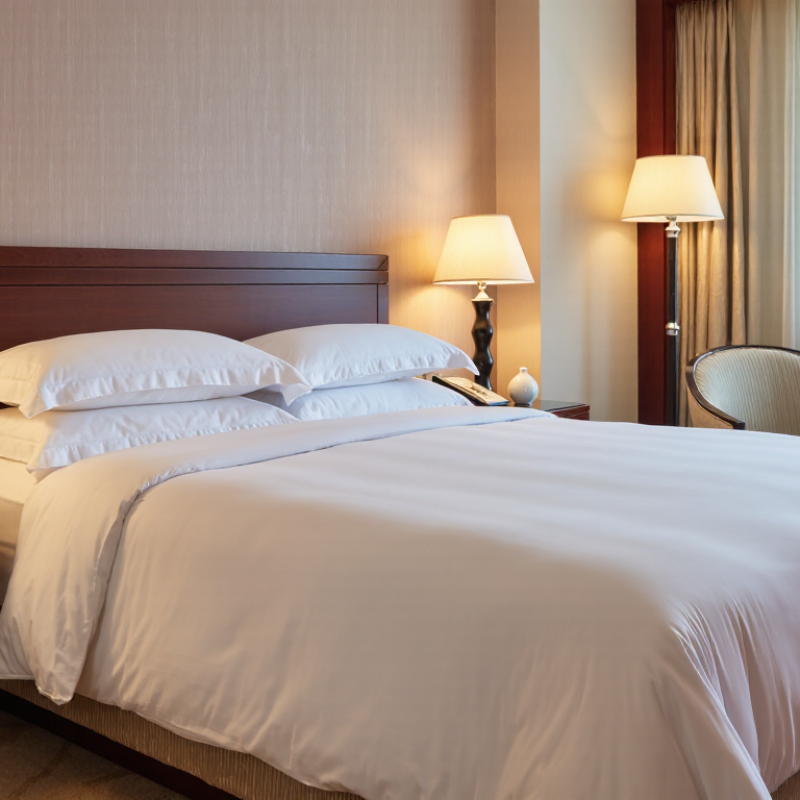
Hotel bed sheet sets are coordinated linen groups prepared for repeated guest use. A typical set includes a fitted sheet, a flat sheet, and two pillowcases. Some hospitality sets also include duvet covers or extra pillow protectors. Their purpose is practical: create a clean, smooth, breathable sleep surface that fits the mattress securely.
Professional laundering and fabric selection matter more than decoration. Cotton and cotton-blend sheets are common because they balance softness, airflow, durability, and drying time. The National Sleep Foundation’s Bedroom Poll reported that 73% of adults sleep more comfortably with fresh sheets. That finding supports a simple operational truth: crisp linen affects the guest’s first physical impression.
However, thread count can mislead buyers. Fiber quality, weave, fabric weight, and finishing deserve equal attention. A higher number is not automatically better.
Tips: Check mattress depth before ordering. Confirm shrinkage after washing. Choose fitted sheets with strong elastic corners. Test the fabric under warm lighting and against bare skin. Avoid excessively stiff finishes. They may look polished, but they can feel cold and noisy. A small weakness remains: even excellent sheets cannot fix a poor mattress or humid room. Inspectors should record softness, pilling, seam strength, and drying performance after several wash cycles.
How Hotel Sheet Materials Affect Guest Comfort
Hotel sheet materials directly influence how guests feel during the night. Cotton often feels cool, soft, and breathable against the skin. Its natural absorbency can help manage perspiration in warm rooms. The National Sleep Foundation’s Bedroom Poll found that 78% of people considered comfortable sheets and bedding important for good sleep. That figure shows why fabric selection deserves more attention than thread count alone.
Fiber content is only part of the experience. A tightly woven cotton sheet may feel durable, but it can feel warmer and less flexible. Percale usually offers a crisp, airy touch, while sateen feels smoother and warmer. Polyester can resist wrinkles and dry quickly, yet some guests may notice reduced breathability. Textile Exchange’s 2024 Materials Market Report estimated polyester represented about 59% of global fiber production, compared with roughly 22% for cotton. Hospitality teams should not treat those percentages as comfort scores.
We test sheets after repeated washing, not only when they arrive. A fabric that feels luxurious on day one may become rough, stiff, or heavily pilled later. Room temperature, humidity, mattress protectors, and laundering chemicals also change the guest experience. Sometimes, a simpler cotton blend performs better. It is not always the most expensive option. Feedback remains essential because guests sleep differently, and our assumptions can be wrong. A practical selection should balance softness, airflow, durability, drying time, and sensitive-skin considerations.
How Hotel Bed Sheet Sets Support Cleanliness and Hygiene
Hotel bed sheet sets support cleanliness through consistent handling. Each set can include a fitted sheet, flat sheet, and pillowcases, making room preparation more controlled. Housekeeping staff can remove the complete set after checkout and place used pieces in sealed laundry bags. This reduces contact with floors, carts, and other textiles.
In my experience, visible cleanliness starts with a simple routine. Staff should inspect sheets under bright light for stains, hair, loose threads, or damp areas. Laundry teams should follow fabric care labels, use measured detergent, and select suitable wash temperatures. Complete drying matters because trapped moisture can encourage unpleasant odors and microbial growth. Clean sheets should rest on dry, sanitized shelves, away from used linens and cleaning chemicals. They should also be handled with clean hands before placement.
Small details matter.
Standardized sets help managers document laundry cycles and replace damaged pieces promptly. White or light-colored fabrics can make marks easier to notice, although color alone cannot prove hygiene. No linen system is flawless. A rushed inspection may miss a faint stain, and overloading a washer may limit proper cleaning. Regular staff training, spot checks, and clear replacement rules create stronger protection for guests. The most reliable approach combines professional laundering, careful storage, and honest review of weak points.
Why Choose Hotel Bed Sheet Sets for Better Guest Comfort?
Hotel bed sheet sets support cleanliness and hygiene when they can be processed through consistent, high-temperature laundry routines. A 60°C wash is widely used for routine linen processing, while the CDC identifies 71°C (160°F) for 25 minutes as a hot-water laundry benchmark for healthcare settings. Standardized sheet sets make sorting, washing, drying, and replacing linens more reliable.
Reference: Centers for Disease Control and Prevention, “Guidelines for Environmental Infection Control in Health-Care Facilities.” Temperature figures are laundry benchmarks, not a universal requirement for every hotel.
What to Consider When Choosing Hotel Bed Sheet Sets
Hotel bed sheet sets should be chosen for more than a bright white appearance. Guests notice fabric texture, heat retention, and unpleasant odors after a long journey. The J.D. Power 2024 North America Hotel Guest Satisfaction Index Study collected responses from 39,711 hotel guests. Its findings reinforce a practical point: room condition and cleanliness strongly influence satisfaction. Therefore, select sheets that feel smooth, remain breathable, and tolerate frequent commercial laundering.
When comparing hotel bed sheet sets, check fiber composition, fabric construction, shrinkage, and replacement cost. Long-staple cotton often offers a soft hand feel, while cotton-polyester blends can improve durability and reduce wrinkles. Thread count helps, but it is not a complete quality measure. Overly high counts may use thinner yarns or misleading counting methods. The Global Organic Textile Standard also requires certified textiles to meet defined environmental and social criteria, which can support more responsible purchasing. Still, certification does not guarantee ideal comfort. Testing matters more.
Tips: Wash sample sets repeatedly before ordering. Sleep on them for several nights. Check seams, pilling, drying time, and color stability. A 2024 report from the American Hotel & Lodging Association highlights continued guest expectations for cleanliness and quality, but operators should not chase perfection blindly. A slightly heavier sheet may feel luxurious yet dry slowly. A cheaper blend may perform better in busy rooms. Guest feedback should guide the final choice.