
Interest in Mild Hyperbaric Chamber technology is growing beyond hospitals, wellness centers, and rehabilitation facilities. Yet the market remains difficult to measure accurately. Grand View Research valued the global hyperbaric oxygen therapy devices market at approximately USD 3.9 billion in 2023. Its report also projects continued growth through 2030. That figure covers medical hyperbaric systems broadly. It does not represent mild chambers alone.
Definitions matter here.
Dr. Eric P. Kindwall, a leading hyperbaric-medicine authority, described hyperbaric oxygen therapy as “the medical use of oxygen at pressures greater than one atmosphere absolute.” This distinction helps readers separate regulated clinical treatment from lower-pressure consumer equipment. The U.S. Food and Drug Administration has also warned that some chamber-related health claims lack sufficient evidence. The Undersea and Hyperbaric Medical Society recommends focusing on recognized clinical indications, qualified operators, and appropriate safety procedures.
This guide examines China’s top 10 Mild Hyperbaric Chamber manufacturers through a practical E-E-A-T lens. We consider manufacturing experience, pressure control, oxygen delivery, emergency design, certifications, after-sales support, and transparent documentation. A quiet compressor, visible pressure gauge, and clear emergency-release system can reveal more than polished advertising. However, no ranking is absolute. Factory audits, independent testing, and local regulatory review still matter. Some supplier information is incomplete or promotional. That weakness deserves attention, not concealment. Buyers should verify specifications directly before making medical, commercial, or institutional decisions.
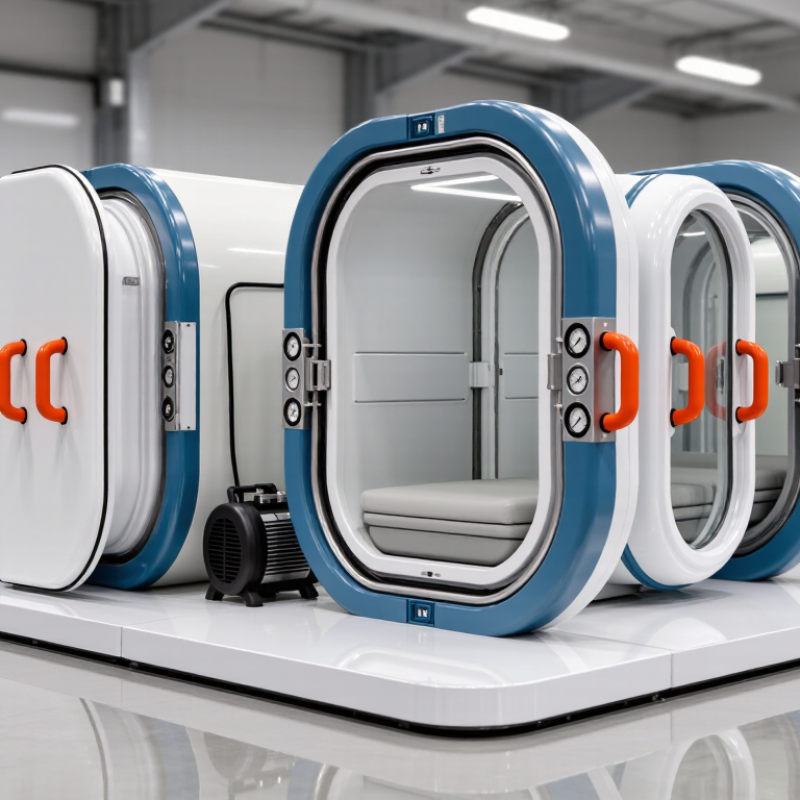
Mild hyperbaric chambers are pressurized enclosures designed to create a modest increase in atmospheric pressure.
Many operate around 1.3 to 1.5 atmospheres absolute, although specifications vary. Users usually breathe normal air, not concentrated oxygen. That distinction matters because mild chambers are not identical to hospital-grade hyperbaric systems.
How do they work?
A compressor gradually increases pressure inside the chamber. This allows slightly more oxygen to dissolve into blood plasma and body fluids. The user may notice ear pressure, similar to an airplane descent. Slow pressure changes and proper ear equalization improve comfort.
A trained operator should explain the controls, inspect seals, and monitor the session throughout.
The experience can feel quiet and surprisingly ordinary. Results are less simple.
Some people report relaxation or temporary comfort, but research on many wellness claims remains limited or mixed. I would not describe mild hyperbaric therapy as a cure. That wording is too confident.
Medical conditions, pregnancy, lung problems, ear injuries, and certain treatments require professional screening before use. Chamber materials, emergency release systems, pressure accuracy, and cleaning procedures deserve careful review when comparing Chinese manufacturers. Certification documents should be verified, not merely displayed. The technology has potential, but responsible use still depends on evidence, supervision, and realistic expectations.
How to Evaluate China’s Mild Hyperbaric Chamber Manufacturers
Evaluating China’s mild hyperbaric chamber manufacturers requires more than comparing prices. Check the factory’s operating history, engineering team, and production records. A reliable supplier should explain chamber pressure, materials, window design, ventilation, and emergency release systems in clear language. Avoid vague promises about wellness or medical results.
Request recent test reports from qualified laboratories. Verify pressure testing, electrical safety, fire resistance, and oxygen-related controls where applicable. Ask whether the factory follows a documented quality system, such as ISO 13485, when the product’s intended use requires it. Certification alone is not enough. Confirm the certificate’s scope, issuing body, and matching model number.
Inspect the manufacturing site through a live video call or an independent audit. Look for clean assembly areas, traceable components, calibration labels, and final inspection records. Ask for photographs of welds, seals, valves, and control panels. These small details often reveal production discipline. A serious manufacturer should provide user manuals, maintenance schedules, spare-part information, and staff training materials.
Communication after payment also matters. Test how quickly the team handles a technical question. Request a written response, not only a sales message. I have found that polished catalogs can hide weak documentation. That possibility deserves attention. Sample testing is wise, but it cannot replace a factory audit or independent safety review. Compare warranty terms carefully, especially response times and replacement procedures. Some suppliers may offer attractive customization, yet every modification can affect testing, maintenance, and user safety.
Use the following buyer-focused weighting model when comparing China-based mild hyperbaric chamber suppliers. The chart emphasizes safety, pressure control, product durability, service capability, customization, and total cost.
The percentages represent suggested evaluation weights for supplier due diligence, not the performance or ranking of any specific company.
China’s top 10 mild hyperbaric chamber manufacturers should be judged by evidence, not marketing language. A credible supplier shows factory records, pressure testing procedures, material certificates, and traceable quality controls. ISO 13485 may indicate a medical-device quality system, but it does not automatically prove clinical effectiveness. Buyers should check the actual certification scope.
Good manufacturers usually provide clear chamber dimensions, operating pressure, oxygen delivery details, noise data, and emergency-release instructions. Look for reinforced windows, reliable zippers, pressure gauges, and accessible control panels.
A practical inspection should include seam finishing, valve response, electrical grounding, and cleaning access. Small details matter.
Ask for training documents and maintenance schedules. Ask again.
The leading ten suppliers may differ in design, output capacity, and after-sales support. Some focus on home-use chambers, while others build systems for wellness centers or professional facilities. Their product claims still require careful review.
Mild hyperbaric equipment should not be treated as a substitute for diagnosis or medical care. Operators need clear user screening and supervision procedures.
My own evaluation would also include delivery packaging and service response time. A strong chamber can become difficult to use when spare parts arrive slowly.
Factory videos are useful, but an independent inspection is more convincing. No ranking remains perfect without updated testing, customer feedback, and verified production records.
China Top 10 Mild Hyperbaric Chamber Manufacturers: Comparing Features and Applications
The leading Chinese manufacturers differ in chamber design, control systems, and intended use. Some offer soft chambers for home wellness settings. Others build rigid models for clinics, recovery centers, and research facilities. Typical systems operate at mild pressures, often around 1.3 to 1.5 ATA, but specifications vary.
Safety features deserve close attention. Reliable manufacturers provide pressure monitoring, emergency-release controls, ventilation, and clear user instructions. Transparent panels can reduce anxiety during sessions. Larger chambers may support reclining or multiple users, while compact models suit smaller rooms. Internal materials, zipper quality, electrical protection, and cleaning access also affect daily usability.
Applications are not identical. Wellness facilities may value comfortable seating, quiet compressors, and simple controls. Clinical environments usually require stronger documentation, maintenance records, and staff training. Some suppliers provide oxygen concentrators, while others use ambient air systems. This difference changes operating procedures and risk management.
Certification claims should be checked carefully. A certificate alone does not prove performance. Buyers should request test reports, warranty terms, replacement-part availability, and service response times. Marketing language can sound impressive. It is not always precise. Published pressure data may also omit noise levels or actual inflation time. Comparing complete specifications is more useful than comparing prices. Medical decisions should remain with qualified professionals, especially for people with respiratory, ear, cardiovascular, or other health conditions.
Anonymized comparison of commonly available Chinese mild hyperbaric chamber configurations
| Profile | Chamber Format | Typical Capacity | Operating Pressure | Main Construction | Oxygen Delivery | Common Applications | Notable Features | Typical Buyer | Compliance Considerations |
|---|---|---|---|---|---|---|---|---|---|
| Profile 01 | Single-person soft chamber | 1 person | 1.3–1.5 ATA | PVC or TPU-coated fabric with viewing window | Ambient air; optional oxygen concentrator | Wellness centers, home-use programs, sports recovery | Compact footprint, reclining mattress, simple controls | Households and small studios | Pressure-vessel safety, electrical safety, user supervision |
| Profile 02 | Single-person hard-shell chamber | 1 person | 1.3–1.5 ATA | Acrylic viewing section with metal frame | Ambient air or low-flow oxygen system | Private clinics, rehabilitation, sports facilities | Rigid structure, easier cleaning, integrated monitoring | Clinics and premium wellness facilities | Documentation for materials, pressure testing and electrical systems |
| Profile 03 | Two-person soft chamber | 2 people | 1.3–1.5 ATA | Multi-layer reinforced fabric and transparent panels | Ambient air with optional concentrator kits | Family wellness, recovery rooms, boutique clinics | Shared sessions, foldable structure, transportable design | Wellness operators and small medical practices | Ventilation, fire-risk controls and operating procedures |
| Profile 04 | Three-person soft chamber | 3 people | 1.3–1.5 ATA | Reinforced PVC/TPU body with tubular support frame | Ambient air; optional separate oxygen supply | Recovery lounges, hotel spas, occupational wellness | Multiple viewing areas, external pressure gauge, emergency release | Hotels, gyms and wellness chains | Site ventilation, operator training and maintenance records |
| Profile 05 | Four-person hard-shell chamber | 4 people | 1.3–1.5 ATA | Steel or aluminum shell with acrylic windows | Ambient air or controlled oxygen enrichment | Rehabilitation centers, clinics and sports medicine | Durable interior, digital pressure display, audio communication | Medical and institutional buyers | Pressure testing, electrical conformity and local medical-device rules |
| Profile 06 | Six-person soft chamber | 6 people | 1.3–1.5 ATA | Heavy-duty fabric shell with modular internal seating | Ambient air with optional oxygen concentrators | Large wellness centers, team recovery and resorts | High throughput, removable covers, independent air circulation | Commercial wellness facilities | Fire-safety assessment, ventilation capacity and evacuation planning |
| Profile 07 | Eight-person hard-shell chamber | 8 people | 1.3–1.5 ATA | Welded metal shell with multiple observation windows | Central air system; optional oxygen masks or hoods | Hospitals, sports institutes and rehabilitation centers | Central monitoring, intercom, emergency decompression controls | Institutional and clinical purchasers | Formal engineering review, pressure certification and installation approval |
| Profile 08 | Portable single-person chamber | 1 person | 1.3–1.4 ATA | Lightweight fabric shell and compact compressor system | Ambient air; optional portable concentrator | Mobile wellness services, home use and travel programs | Fast setup, carrying case, low power consumption | Mobile operators and individual users | Transport safety, compressor protection and clear user instructions |
| Profile 09 | Premium two-person hard chamber | 2 people | 1.3–1.5 ATA | Acrylic or polycarbonate body with metal enclosure | Dedicated oxygen concentrator with masks or hoods | Private hospitals, executive wellness and sports medicine | Quiet compressor, touch display, data logging and intercom | Premium clinical and hospitality facilities | Oxygen-enriched environment controls and documented risk management |
| Profile 10 | Modular multi-person chamber | 6–12 people | 1.3–1.5 ATA | Segmented rigid or semi-rigid structure with modular controls | Central air supply with optional oxygen delivery stations | Hospitals, rehabilitation networks and high-volume centers | Scalable layout, centralized monitoring, serviceable components | Large commercial and institutional buyers | Project-specific engineering, installation inspection and regulatory approval |
Choosing among China’s top mild hyperbaric chamber manufacturers requires more than comparing prices. UHMS defines clinical hyperbaric oxygen therapy as treatment above 1.4 ATA with near-100% oxygen. Many mild chambers operate below that level, so sellers should not imply equivalent clinical outcomes. Ask for the exact pressure range, oxygen concentration, leak rate, emergency release design, and independent test records.
Manufacturing evidence matters. Request ISO 13485 quality-system certification, material traceability, pressure-vessel calculations, electrical safety reports, and factory inspection access. Certificates alone are insufficient. Verify their issuing bodies and match serial numbers with production records. Grand View Research estimated the global hyperbaric oxygen therapy devices market at about US$3.6 billion in 2023, with continued growth expected through 2030. That growth attracts capable suppliers, but also encourages rushed assembly and inflated claims.
Examine the chamber directly, if possible. Look at door seals, viewing windows, oxygen tubing, control panels, and cleaning points. Ask how failures are reported and how replacement parts are stocked. A reliable manufacturer should provide training, maintenance schedules, user manuals, and multilingual technical support. Delivery history deserves evidence, not screenshots. A factory may offer an attractive quotation yet lack long-term service capacity. That risk is easy to underestimate. Also, local medical-device rules differ by market, and the importer remains responsible for compliance. The overlooked detail may be the expensive one.
Sign up today to keep up with the newest information from one of the Southeast’s leading suppliers of fluid handling equipment!