Top 10 EV Charging Connectors in China What You Should Know?
The rapid growth of electric vehicles (EVs) in China has underscored the crucial role of EV Charging Connectors. According to a report by the China Electric Vehicle Charging Infrastructure Promotion Alliance, the number of public charging points in China exceeded 1.5 million in 2022. This surge highlights the increasing need for reliable and efficient charging solutions. The choice of EV charging connector can influence charging speed and compatibility for end-users, making it an important factor for EV adoption.
Data from recent industry analysis shows that the demand for EV charging connectors will rise significantly, with projections estimating a compound annual growth rate (CAGR) of over 20% from 2023 to 2028. As more manufacturers and consumers enter the market, the standardization of EV charging connectors becomes more pressing. Confusion over connector types may hinder user experience and limit the expansion of charging infrastructure. Thus, understanding the leading types of connectors available in China is essential for stakeholders navigating this evolving landscape.
However, amidst this growth, challenges still exist. Some connectors face compatibility issues across different EV models. Moreover, the lack of a unified standard has led to varied connector types being used. This fragmentation can create obstacles for users and impact their charging experience. Consequently, it is vital to assess the top EV charging connectors in China, focusing on their specifications, advantages, and limits within this dynamic market.
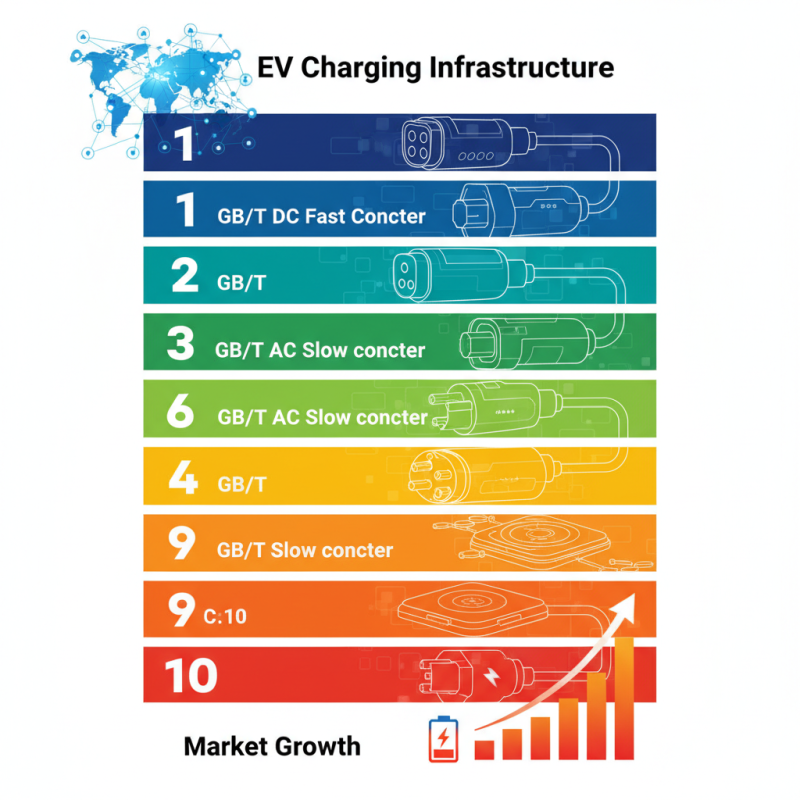
Overview of EV Charging Connectors in China
In recent years, electric vehicle (EV) adoption has surged in China, leading to a growing need for effective charging solutions. Various EV charging connectors have emerged, each designed to cater to specific vehicle requirements and charging speeds. Understanding these connectors is crucial for consumers and industry players alike.
The most common connector types include Type 2, CHAdeMO, and CCS. Type 2 is widely used for AC charging across a range of EVs. It is user-friendly and compatible with many domestic vehicles. CHAdeMO, on the other hand, is prevalent among Japanese automakers, enabling rapid charging. CCS combines AC and DC charging in one connector, offering versatility and efficiency.
However, discrepancies exist in charging standards, leading to confusion among users. Some chargers may not be compatible with all cars, causing delays. Rarely do charging stations offer a full range of connector types, which can lead to frustration among EV owners. Awareness of these differences can enhance the charging experience.
Top 10 EV Charging Connectors in China What You Should Know?
| Connector Type | Charging Standard | Power Output (kW) | Voltage (V) | Usage Rate (%) |
| Type 1 (SAE J1772) | AC Charging | 7.4 | 240 | 15 |
| Type 2 (Mennekes) | AC Charging | 22 | 400 | 45 |
| CCS (Combined Charging System) | DC Charging | 50-350 | 400 | 30 |
| CHAdeMO | DC Charging | 62.5 | 500 | 25 |
| GB/T 20234.2 | DC Charging | 30-250 | 750 | 60 |
| GB/T 20234.1 | AC Charging | 7.2 | 220 | 35 |
| Tesla Supercharger | DC Charging | 120-250 | 480 | 40 |
| Type 3 (Scame) | AC Charging | 22 | 400 | 20 |
| NEMA 5-15 | AC Charging | 1.4 | 120 | 10 |
| UK Type G | AC Charging | 3.6 | 230 | 5 |
Key Types of EV Charging Connectors Available
In China, electric vehicle (EV) charging connectors play a crucial role in vehicle compatibility and charging efficiency. There are several key types of connectors available, each designed for specific charging needs. The most common types include GB/T, CCS, and CHAdeMO. Each has unique features that cater to different EV models and their charging speeds.
The GB/T connector is the standard for most domestic electric vehicles. It ensures widespread accessibility and easy charging solutions across various stations. Meanwhile, the CCS connector combines AC and DC capabilities, allowing for faster charging. This makes it popular among a growing number of international EV manufacturers. The CHAdeMO connector, mainly associated with certain Japanese brands, offers fast charging but faces compatibility challenges in the Chinese market.
Familiarity with these connectors is essential for EV owners. Users sometimes face difficulties finding compatible charging stations. Not all stations support every connector type. Therefore, understanding the differences can prevent frustration and wasted time. Remember that the EV market is still evolving, which may lead to changes in connector availability in the future.
Top 10 EV Charging Connectors in China
This chart depicts the distribution of the top EV charging connector types used in China, highlighting their popularity and importance in the electric vehicle infrastructure.
Technical Specifications of Popular Connectors
Electric vehicle (EV) charging connectors in China come in various types, each with unique technical specifications. Understanding these specifications is essential for effective charging solutions. The Type 2 connector is widely used in Europe but has gained traction in China. It supports single-phase and three-phase charging up to 22 kW. This versatility makes it a popular choice among EV manufacturers.
Another significant connector is the GB/T standard, which is specific to China. It allows for both AC and DC charging, with power levels reaching up to 240 kW. This capability makes it suitable for fast charging stations. However, some users find compatibility issues with foreign EVs. Despite its advantages, transitioning to a unified charging system remains a challenge.
Further, the CCS (Combined Charging System) is important for fast charging. It integrates a Type 2 connector for AC charging and adds two pins for DC charging. This hybrid design enables higher efficiency. But, there's ongoing debate about its widespread adoption. Each connector type has its strengths and weaknesses. Users need to weigh these factors for their specific charging needs.
Compatibility and Standards Among Connectors
In China, electric vehicle (EV) charging connectors play a crucial role in ensuring the widespread adoption of EVs. Understanding the compatibility and standards among these connectors is vital for both users and manufacturers. The landscape in China features several prevalent charging standards, primarily the GB/T standard, which dominates the market. This standard ensures that EVs from various manufacturers can use a common charging infrastructure, facilitating seamless energy transfer.
Another important aspect to consider is the issue of interoperability. While most charging stations adhere to the GB/T standard, some imported EVs utilize different connectors. This can lead to confusion for users. It’s essential to know which connectors your vehicle supports. The lack of clear labeling on some charging stations adds to the complexity, making it challenging for EV owners to find compatible options.
Additionally, safety standards are another area that requires attention. Some connectors may not meet the rigorous safety protocols applied in China. Users must be aware of these discrepancies to avoid risks such as overheating or malfunctioning equipment. As the EV market evolves, attention must remain on ensuring that all connectors comply with safety and compatibility standards. Only then can the transition to electric vehicles be both efficient and secure for all users.
Future Trends in EV Charging Infrastructure in China
The electric vehicle (EV) market in China is rapidly evolving. With this growth, charging infrastructure is critical. Cities are investing heavily in new charging stations. However, the current network still has gaps. Some areas lack sufficient charging options. This can discourage potential EV buyers.
Innovation is key to the future of EV charging. Wireless charging technology is gaining traction. It promises to enhance user convenience. Another trend is faster charging solutions. These can reduce wait times significantly at stations. Yet, these advancements come with challenges. Reliability and safety must be prioritized. Charging standards vary across regions, creating confusion. Standardization is essential for seamless use.
Sustainability is also at the forefront. Many charging stations are adopting green energy sources. Solar-powered stations are becoming more common. However, the integration of renewable energy presents technical hurdles. The balance between accessibility and sustainability needs careful planning. As the charging landscape changes, collaboration among stakeholders is vital. Only through collective effort can a robust infrastructure be realized.