
How to Choose the Best Turf Rakes for Your Needs

Choosing the right Turf Rakes begins with understanding the ground beneath your feet. A golf green, sports field, garden bed, and artificial-turf edge demand different tools. A stiff metal rake can remove heavy thatch quickly, but it may scratch delicate soil or tear young grass. A flexible plastic rake feels gentler, although it may struggle with wet leaves and compacted debris. No rake fits every surface.

The University of Georgia’s National Turfgrass Industry Economic Impact Study reported that the United States turfgrass industry generated approximately $58.7 billion in annual economic value and supported more than 822,000 jobs. That scale reflects a demanding maintenance environment. Small tool choices can influence labor time, turf recovery, and surface appearance. The Golf Course Superintendents Association of America also emphasizes site-specific maintenance, because traffic, moisture, grass variety, and seasonal growth change performance. The best rake is not always the strongest one.

Dr. William H. Daniel, a pioneer in turfgrass science, offered a useful principle: “Turfgrass is a plant, not a carpet.” His words remain relevant when comparing Turf Rakes. Look at tine spacing, head width, handle length, weight, and material. Consider the operator, too. A wide head may cover more ground, but it can become tiring after repeated passes. A lightweight rake may feel ideal at first, yet bend under heavier thatch. Test the tool on a small area. That step is easy to skip. It is also where many purchasing mistakes begin.
How to Choose the Best Turf Rakes for Your Needs

Define Your Turf Raking Goals and Maintenance Needs

How to Choose the Best Turf Rakes for Your Needs

Before choosing a turf rake, define the work your lawn actually needs. Are you removing thatch, spreading soil, lifting leaves, or brushing standing grass? Each task demands a different rake head, tine pattern, and handle length. A stiff metal rake can break compacted thatch, while flexible plastic tines may suit delicate turf. Watch the lawn after mowing. Thick brown layers near the soil surface often indicate thatch buildup, but a thin layer may not require aggressive raking.

Your maintenance schedule matters too. For a small residential lawn, a lightweight rake can reduce fatigue during seasonal cleanup. Larger areas may need a wider head, but excessive width can become awkward around trees, edges, and uneven ground. Choose an adjustable handle if several people will use the tool. Check tine spacing, grip comfort, and head strength before buying. I have found that comfort often matters more than advertised durability. A rake that feels excellent for five minutes may become tiring after an hour.

Tips: Test the rake on a small area first. Pull gently in one direction, then inspect the grass crowns. Stop if roots lift or green blades tear. Rake when the turf is slightly dry, not waterlogged. Clean the tines after use, and store the tool under cover. My own mistake was raking too aggressively in spring. The lawn recovered, but slowly. A lighter touch would have been wiser.


Compare Turf Rake Types, Tine Designs, and Materials

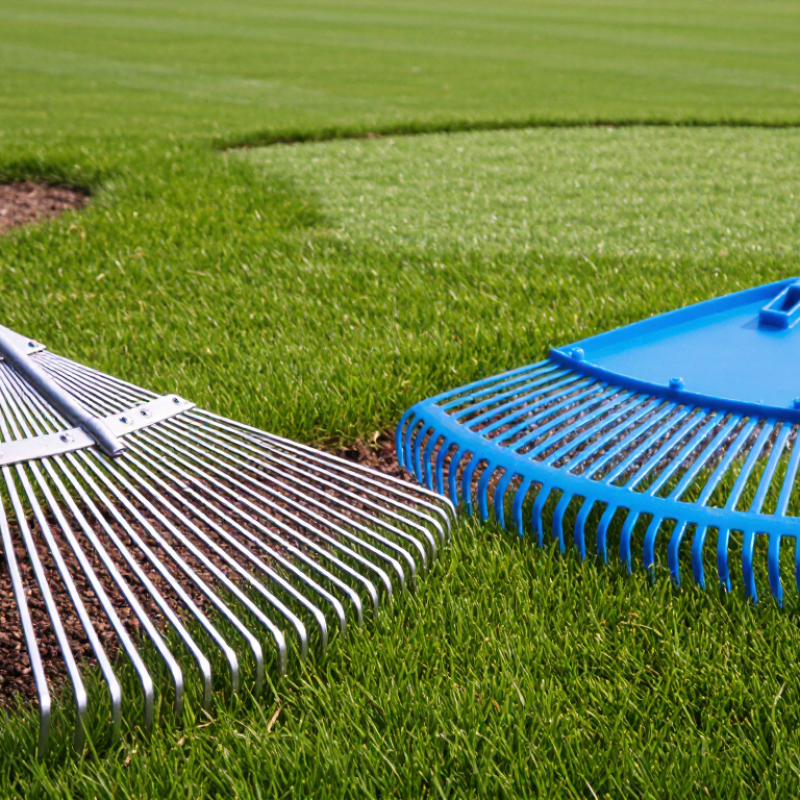
Choosing the right turf rake starts with the job, not the handle color. Thatch rakes use sharp, rigid tines to lift dead grass and surface debris. Leaf rakes spread flexible tines across larger areas. Leveling rakes use a flat head to distribute topdressing and smooth uneven soil. Start with the turf.

Tine design changes how much pressure reaches the ground. Straight steel tines remove compacted thatch effectively, but they can scratch delicate roots. Curved tines gather material with less digging. Spring tines flex over stones and rough patches, making them useful for established lawns. Adjustable tine spacing offers control, although its joints may collect soil and need cleaning.

Material affects weight, durability, and handling. Hardened steel suits heavy thatch and frequent work. Stainless steel resists rust, especially in damp storage conditions. Aluminum heads feel lighter, but they may bend under strong pressure. Plastic tines are gentle and suitable for light debris, though they can break in cold weather. I have found that a slightly flexible rake often protects thin turf better than the strongest model. That choice is not perfect. Test a small patch first, then inspect the grass for lifted roots, scratched soil, or missed debris. A comfortable handle and balanced head also matter after thirty minutes of repeated pulling.

Choose the Right Rake Size, Weight, and Handle Length

Choosing the best turf rake starts with matching the head to the surface. A wide head covers large synthetic fields quickly, but it can drag heavily through wet infill. For narrow sidelines and repair zones, a smaller head offers better control. Sports Turf Managers Association maintenance guidance emphasizes consistent surface grooming and avoiding excessive displacement of infill. That makes head width a workload decision, not just a speed choice.

Weight matters. NIOSH’s Revised Lifting Equation uses a 51-pound load constant under ideal conditions, but this is not a recommended rake weight. Repeated sweeping creates different stresses. A lighter rake, around 1.5 to 3 pounds, usually feels easier during long grooming sessions. Very light tools can flex, though. I once chose the lightest option and found that poor stiffness increased my wrist movement. That choice was not as efficient as expected.

Handle length should keep your back fairly upright. ANSUR II anthropometric data places average adult standing elbow height near one meter, with meaningful differences between users. A handle around 60 to 72 inches suits many adults, while shorter users may need less length. OSHA ergonomics guidance supports reducing awkward posture, force, and repetition. Measure yourself. Do not trust a standard size blindly. The handle should let the rake head contact the turf without constant bending, shoulder lifting, or tight gripping.

Evaluate Features for Different Grass and Lawn Conditions

How to Choose the Best Turf Rakes for Your Needs

Choosing a turf rake starts with identifying the grass and the problem. Fine fescue can tear under stiff, widely spaced tines. It usually needs flexible metal or plastic tines that lift thatch gently. Bermuda grass often tolerates a firmer rake during active growth. For cool-season lawns, rake when the soil is slightly moist, not muddy. Dry soil can make dead grass scatter instead of collecting.

Check tine spacing, handle length, head width, and adjustment options. Narrow heads work better around flower beds and tight corners. Wider heads save time on open lawns, but they can pull unevenly across bumps. A curved head may gather leaves efficiently, while a flatter head can remove surface thatch more evenly. My first choice was too aggressive. It scratched the soil and exposed small roots.

Rake weight also matters. A heavy tool may clear dense thatch, yet it can fatigue your wrists after several passes. Look for a comfortable grip and a shaft that keeps your back reasonably straight. Test the rake on a small patch. Watch the grass blades.

If healthy blades bend but remain rooted, the pressure is probably acceptable. If soil appears quickly, reduce force or change the tine style.

Not every lawn needs deep raking. Some lawns only need light debris removal after mowing. I still check the surface afterward, because a clean-looking lawn can hide compacted thatch beneath it.

Check Durability, Comfort, Storage, and Overall Value

How to Choose the Best Turf Rakes for Your Needs

Durability should match your workload, not merely the rake’s appearance. Check the tine material, joint strength, and handle connection. A reinforced head matters when clearing wet thatch, compacted leaves, or gravelly soil. The U.S. Bureau of Labor Statistics reported 2.6 million nonfatal workplace injuries and illnesses in private industry during 2023. That figure does not measure rake injuries specifically, but it supports a practical point: reliable tools can reduce unnecessary strain and repeated handling.

Comfort becomes important after an hour of sweeping. Choose a handle that fits your height and keeps your wrists near a neutral angle. A textured grip helps when gloves become damp. Test the rake with both hands, then simulate a pulling motion across uneven ground. Short trials can mislead. I once preferred a lightweight model, but its narrow grip made longer tasks surprisingly tiring.

Storage affects long-term value. A hanging hole, slim profile, or removable handle can protect the tines and save shed space. Compare the purchase price with expected service life, replacement parts, and maintenance needs. The U.S. National Institute for Occupational Safety and Health recommends assessing force, posture, repetition, and tool design during ergonomic evaluations. Use that framework before buying. A slightly heavier rake may offer better control, yet weight becomes a weakness during daily commercial work. Review the details honestly.

Stay Connected

Sign up today to keep up with the newest information from one of the Southeast’s leading suppliers of fluid handling equipment!