

How to Buy Bulk Matcha Powder for Your Business?
Buying Bulk Matcha Powder requires more than comparing prices on a supplier’s website. The right product must match your customers, recipes, serving size, and brand expectations. A bright green powder may look impressive, yet color alone cannot prove quality. Flavor, aroma, texture, origin, and freshness matter just as much.
This guide explains practical steps for evaluating wholesale matcha suppliers. You will learn how to compare culinary and ceremonial grades, review harvest information, and request reliable documentation. Ask for a current Certificate of Analysis, batch details, allergen information, and storage guidance. Reputable suppliers should explain their testing process clearly. They should also answer questions about packaging, minimum order quantities, lead times, and replacement policies.
Small details affect real business costs. A poorly sealed bag can lose freshness before it reaches your café. A powder that clumps may slow service during a busy morning. No buying checklist is perfect. Supplier claims still require careful verification. Samples should be tested in your actual drinks, not only judged from a spoon. This reveals bitterness, sweetness, color stability, and how the powder blends with milk or water. Experienced buyers also calculate landed cost, waste, shelf life, and customer demand before placing large orders. A cheaper purchase can become expensive when quality varies between batches. The goal is not simply to buy more matcha. It is to build a dependable supply that supports consistent products and honest customer expectations.
Define Your Business’s Bulk Matcha Requirements
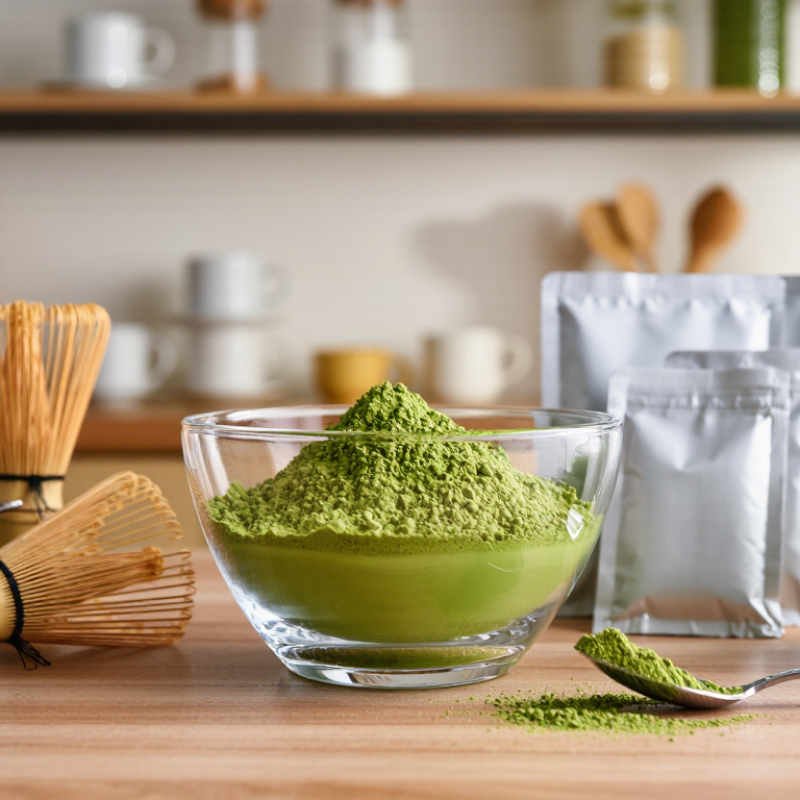
Before buying bulk matcha powder, define how your business will use it. A café may need matcha for lattes, while a bakery may need a stronger flavor for cakes and fillings. These applications require different color, aroma, bitterness, and solubility.
Estimate your monthly usage from real sales data, not guesses. Record how many drinks or products use matcha each day. Add a small buffer for seasonal demand, but avoid excessive stock. Matcha can lose freshness after opening. That matters.
Specify the powder’s key requirements in writing. Include intended grade, color expectations, particle fineness, origin information, packaging size, and preferred shelf life. Ask for a certificate of analysis when available. It should provide relevant testing details, such as microbial safety, heavy metals, and pesticide residues. Reliable suppliers should also explain storage conditions and delivery lead times.
A practical trial can prevent an expensive mistake. Prepare one latte, one cold drink, or one baked product using the proposed powder. Check its whisking behavior, flavor after sweetening, and performance across several batches. I once underestimated how quickly a busy service used matcha; the original volume plan became unrealistic. Recheck your numbers after testing. Packaging also deserves attention. Smaller sealed units may reduce waste, even when their price per kilogram is higher.
| Requirement | Typical Planning Range or Option | Information to Define Before Buying | Why It Matters |
|---|---|---|---|
| End Use | Beverages, bakery, confectionery, dairy products, food service, or supplements | List every finished product, serving size, preparation method, and target flavor profile. | Application determines the required color, aroma, bitterness, solubility, and grade. |
| Matcha Grade | Food-service or culinary grade for recipes; higher sensory grades for drinking applications | Specify whether the powder will be consumed directly or blended with milk, sugar, flour, or other ingredients. | “Ceremonial” and “culinary” are market terms rather than universally standardized legal grades, so sensory samples should be evaluated. |
| Monthly Quantity | 5–25 kg, 26–100 kg, or more than 100 kg per month | Estimate average monthly demand, seasonal peaks, launch volumes, and safety stock. | A realistic forecast helps compare minimum order quantities, storage capacity, and cash-flow requirements. |
| Demand Calculation | Monthly matcha needed = units sold per day × grams per unit × operating days ÷ 1,000 | Use the actual recipe dosage and add a documented allowance for production loss or testing. | This converts sales projections into kilograms and reduces the risk of under-ordering or overstocking. |
| Sensory Profile | Bright green color, fresh vegetal aroma, umami character, low to moderate bitterness | Set acceptable limits for color, aroma, bitterness, astringency, sweetness, and aftertaste using a reference sample. | Sensory expectations can vary by application and should be confirmed through batch samples before a bulk order. |
| Particle and Mixing Performance | Fine powder suitable for the selected preparation method | Define acceptable clumping, dispersion time, sieve performance, and whether the product will be whisked, blended, or dry-mixed. | Matcha does not dissolve completely like a soluble powder; preparation method affects suspension and mouthfeel. |
| Packaging Format | Resealable inner pouches, sealed bags, or lined bulk cartons | Choose pack size according to daily usage, handling procedures, warehouse space, and repacking needs. | Smaller opened packs can reduce repeated exposure to air, light, heat, and moisture. |
| Storage Conditions | Cool, dry, dark, clean, and tightly sealed storage | Confirm the supplier’s storage instructions and define temperature, humidity, pest-control, and stock-rotation procedures. | Matcha quality can decline when exposed to oxygen, light, heat, or moisture. |
| Shelf-Life Requirement | Supplier-declared shelf life, commonly dependent on packaging and storage | Request the production date, best-before date, storage conditions, and minimum remaining shelf life at delivery. | Shelf life varies by processing, packaging, and storage, so it should not be assumed from the product name alone. |
| Quality Documentation | Certificate of analysis, product specification, allergen statement, and traceability records | Define required tests, acceptance limits, lot identification, and document format before purchase. | Documented specifications support incoming inspection, traceability, and consistent production. |
| Safety and Compliance Tests | Microbiological testing, pesticide-residue testing, heavy-metal testing, and contaminant checks as applicable | Confirm the destination market’s legal requirements and the testing frequency for each production lot or shipment. | Testing requirements differ by country, product category, and intended use. |
| Order and Delivery Schedule | One-time order, monthly replenishment, or scheduled quarterly delivery | Define minimum order quantity, target delivery date, reorder point, lead time, and acceptable delivery variance. | A purchasing schedule helps balance freshness, continuity of supply, and inventory cost. |
| Sample Approval | Pre-production sample, pilot batch, and retained reference sample | Approve the same preparation method, recipe, dosage, and evaluation criteria used in production. | Sample approval creates a practical quality reference for future bulk lots. |






Stay Connected
Sign up today to keep up with the newest information from one of the Southeast’s leading suppliers of fluid handling equipment!