

How to Choose the Best Sliding Closet Doors?
Choosing the right Sliding Closet Doors is more than matching a finish to your bedroom. The track, panel weight, opening size, and daily reach all affect performance. A beautiful door can still feel frustrating when it drags, rattles, or blocks half the storage space.
Market research shows why this decision deserves care. Grand View Research estimates that the global interior doors market will continue expanding through 2030, supported by renovation and space-saving demand. Future Market Insights also identifies sliding systems as a growing segment within the broader doors industry. These reports cover several door applications, not closets alone. That limitation matters. Sales growth does not automatically prove better quality.
Closet designer Lisa Adams has said, “A closet should be designed around the way you live.” That principle is practical. Measure the opening, then watch how people use the room. Do shirts hang near the doorway? Does a bedside table interrupt the panel’s movement? A bypass system may save floor space, while a pocket-style solution can offer wider access. Soft-close hardware improves comfort, but it adds cost and requires accurate installation.
My recommendation is simple, though not perfect: compare the entire system, not just the door surface. Check track materials, wheel adjustment, panel thickness, warranty terms, and replacement-part availability. A mirror may brighten a narrow room, yet it also shows fingerprints quickly. Wood-look panels feel warmer, but some lower-cost finishes can peel around humid edges. The best choice balances appearance, access, durability, and honest maintenance expectations.
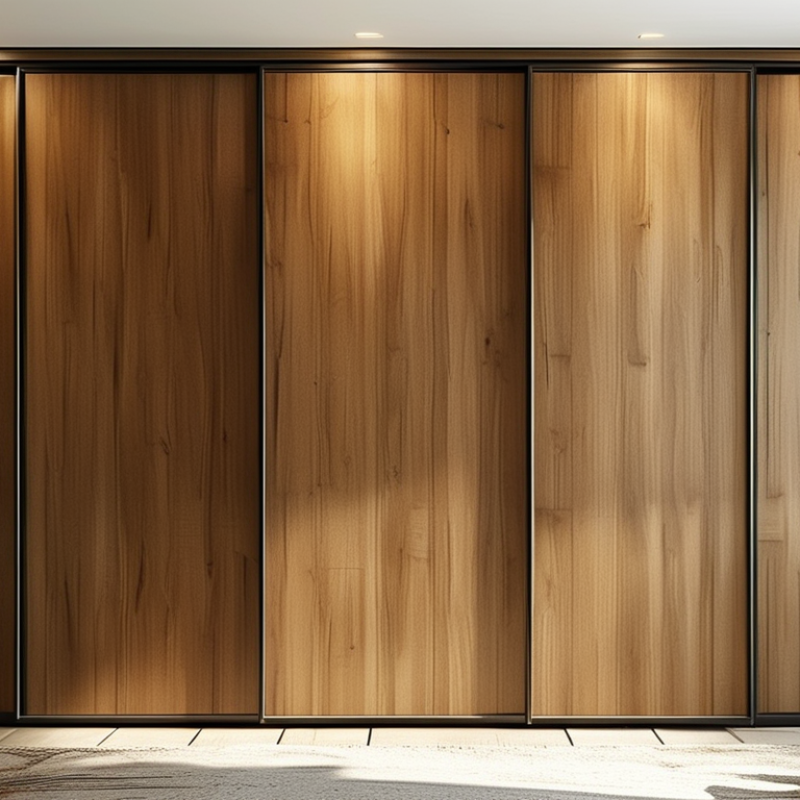
Define Your Closet Space, Storage Needs, and Design Goals
Choosing the best sliding closet doors starts with the space behind them. Measure wall width, ceiling height, floor level, and the door’s opening path. Sliding panels save swing space, but they can hide part of the closet when opened. I measure twice—and occasionally miss a hinge.
Your household and storage habits matter more than fashion. The U.S. Census Bureau’s 2023 American Community Survey reports an average household size of 2.58 people. That figure suggests different storage demands in a couple’s room, a child’s room, or a shared guest room. Count hanging garments, folded items, shoes, luggage, and cleaning tools. Leave usable clearance for drawers and shelves. A crowded interior makes attractive doors feel disappointing.
Design goals should guide the final material and layout. The National Association of Home Builders’ 2023 What Home Buyers Really Want report identifies a walk-in closet as a preferred bedroom feature for 57% of buyers. Your closet may be smaller, but the expectation remains clear: storage should feel accessible. Choose mirrored panels when the room needs reflected light, or textured opaque panels when clutter needs concealment. Check the track quality, panel weight, soft-close performance, and cleaning access. I would not choose doors from a sample alone. View them in morning and evening light. Colors change. Minor details matter.
How to Choose the Best Sliding Closet Doors? - Define Your Closet Space, Storage Needs, and Design Goals
| Decision Factor | Closet Condition or Goal | Recommended Door Option | Typical Space Requirement | Storage and Access Impact | Design Considerations |
|---|---|---|---|---|---|
| Available Floor Space | Limited clearance in front of the closet | Two-panel or bypass sliding doors | Requires little to no front swing area; panels travel within the door opening | Helps preserve usable bedroom or hallway space | Choose slim profiles and light-colored panels to make the room feel more open |
| Closet Opening Width | Opening up to approximately 60 inches wide | Two-panel sliding door system | Each panel commonly covers about half of the opening | Only one side of the closet is fully accessible at a time | Use symmetrical panels for a balanced appearance |
| Closet Opening Width | Opening wider than approximately 60 inches | Three-panel or four-panel sliding system | Requires a compatible multi-track or overlapping-panel layout | Provides a wider visual opening while retaining a compact footprint | More panels can create a stronger horizontal pattern and require careful alignment |
| Maximum Clothing Access | Need to view most of the closet at once | Folding sliding doors or multiple bypass panels | Folding sections project slightly into the room when opened | Folding panels can expose a larger portion of the storage area | Useful when frequent outfit selection is a priority |
| Heavy Storage Loads | Closet includes heavy garments, shelving, or drawers | Sliding doors with a robust top-hung or floor-supported hardware system | Hardware must be selected according to the complete panel weight | Door performance depends on properly supported panels and a level opening | Confirm the hardware load rating and installation requirements before purchase |
| Small Bedroom or Narrow Hallway | Every inch of circulation space matters | Flush sliding panels with recessed or low-profile handles | Does not require the arc of a hinged door | Maintains a clearer walking path in front of the closet | Mirrored or light-finish panels can improve perceived brightness |
| High Humidity Area | Closet is near a bathroom or in a humid climate | Moisture-resistant panels and corrosion-resistant hardware | Allow proper ventilation around the closet and hardware | Reduces the risk of swelling, corrosion, and difficult door movement | Sealed composite, aluminum, or properly finished materials are practical choices |
| Child-Friendly Use | Closet is used by children or in a family bedroom | Lightweight panels with soft-close or anti-jump hardware | Hardware should be securely anchored to the wall, ceiling, or floor structure | Smoother movement can reduce pinching and accidental derailment risks | Avoid sharp edges and choose handles that are easy to grip |
| Modern Minimalist Style | Preference for clean lines and an uncluttered appearance | Frameless or narrow-frame glass, mirrored, or solid-color panels | Consistent panel gaps are important for a finished appearance | Simple surfaces are easy to coordinate with built-in storage | Use neutral colors, concealed-looking tracks, and restrained hardware |
| Traditional or Warm Interior | Room contains wood furniture or classic architectural details | Wood-look, paneled, or framed sliding doors | Panel thickness and trim must fit the existing opening | Provides convenient access without changing the storage layout | Match the tone and grain direction with nearby flooring or cabinetry |
| Privacy Requirement | Want to conceal clothing, shelves, and personal items | Opaque solid panels or frosted glass panels | Use overlapping panels to minimize visible gaps | Offers better visual concealment than clear glass or open shelving | Frosted surfaces diffuse light while maintaining privacy |
| Natural Light or Visual Openness | Closet area needs to feel brighter and less enclosed | Clear, translucent, or mirrored panels | Requires safe glazing or appropriately rated panel materials | Can make a compact room appear larger, but may reveal interior clutter | Mirrors reflect light; translucent finishes provide openness with more privacy |
| Cleaning and Maintenance | Want simple day-to-day upkeep | Smooth panels with accessible tracks and replaceable rollers | Track depth should allow routine vacuuming and wiping | Clean tracks help doors roll more quietly and evenly | Avoid deep grooves if dust accumulation is a concern |
| Installation Readiness | Existing opening is uneven or the floor is not level | Adjustable rollers and a properly sized frame or track system | Measure width at the top, middle, and bottom; measure height at both sides | Accurate measurements reduce rubbing, gaps, and alignment problems | Correct structural support and a level track are essential for reliable operation |
| Budget Control | Need a practical upgrade with predictable costs | Standard-size, lightweight panels with commonly available hardware | Custom sizes, specialty glass, and complex multi-track systems increase cost | Standard components are generally easier to replace or repair | Prioritize smooth hardware, durable finishes, and accurate installation over decorative extras |
Measurement reminder: Record the closet opening width and height at multiple points, check the wall and floor for level, and verify the door system’s panel-size and hardware-weight limits before ordering.






Stay Connected
Sign up today to keep up with the newest information from one of the Southeast’s leading suppliers of fluid handling equipment!