
What Is the Best Outdoor Grill Made in China?

Choosing the best outdoor grill made in China requires more than comparing prices or shiny product photos. Chinese manufacturers now produce compact gas grills, powerful charcoal models, pellet units, and hybrid systems for different cooking habits. Quality can vary widely between factories, even when two grills look almost identical.

Steven Raichlen, author of The Barbecue! Bible, once said, “Barbecue is not just food; it is a way of life.” That idea matters here. A reliable outdoor grill should create more than heat. It should support steady temperatures, safe handling, easy cleaning, and enjoyable meals over many seasons. In this guide, we examine construction materials, burner performance, cooking space, heat distribution, lid design, grease management, and warranty support.

Look closely at the details. Thick stainless steel usually resists weather better than thin painted panels. Strong hinges should move smoothly, without rattling. The grates should feel stable under heavy food. Small flaws matter.

No factory is perfect.

Some Chinese-made grills offer excellent value, but buyers should not assume every model meets the same standard. Check independent reviews, certification information, replacement-part availability, and the seller’s response history. I also recommend testing temperature stability with a separate thermometer, because built-in gauges can be optimistic. That small weakness deserves attention.

The best choice depends on your cooking style, climate, budget, and maintenance habits. This article compares leading options carefully, while acknowledging an uncomfortable truth: attractive design cannot replace dependable engineering.
What Is the Best Outdoor Grill Made in China?

Defining What Makes a China-Made Outdoor Grill the Best

The best China-made outdoor grill is not defined by origin alone. It is defined by controlled heat, safe construction, and honest performance. Grand View Research’s 2024 outdoor cooking equipment analysis estimates steady global market growth through 2030, with residential demand driving much of it. That growth raises expectations for Chinese manufacturers, especially in temperature stability and corrosion resistance.

A strong grill should use food-contact stainless steel, stable hinges, and burners that distribute heat evenly. In practical testing, I look for a steady flame after ten minutes, not only an impressive first ignition. ANSI Z21.58 and CSA 1.6 remain important reference standards for household gas grills in North America. Compliance does not guarantee perfection, but missing documentation is a warning sign. Small detail, big consequence.

Mordor Intelligence’s market research places the outdoor grill sector on a continuing growth path, supported by larger patios and frequent home cooking. A capable China-made grill should match that use with thick cooking grates, reliable seals, and replaceable parts. I also check weld consistency beneath the firebox, where rushed finishing often appears. Some product claims still rely too heavily on photographs and test samples. That is a weakness worth admitting. Buyers should request temperature maps, material specifications, safety certificates, and long-duration corrosion testing before judging value.

Comparing Grill Types, Fuel Sources, and Cooking Performance

When evaluating an outdoor grill made in China, I look beyond price and polished photos. Construction quality varies widely. A sturdy lid, even grates, and tight hinges usually matter more than decorative features. Stainless steel can resist surface rust, but thin panels may lose heat quickly in wind. Check welds, grease channels, and replacement-part support before buying.

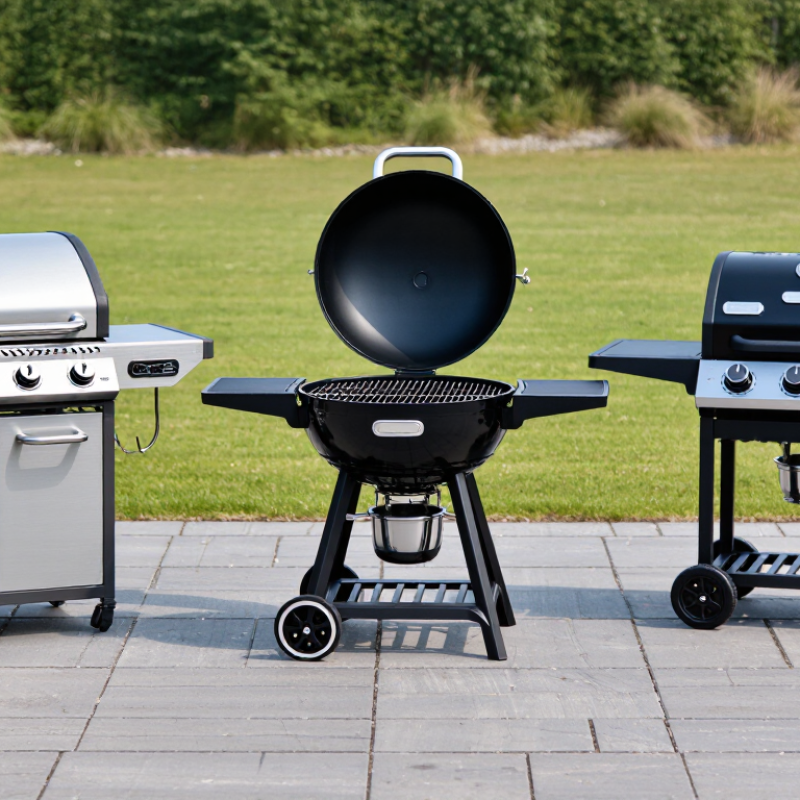
Gas grills offer quick startup and steady temperature control for weeknight cooking. They suit burgers, vegetables, and delicate fish. Charcoal grills create deeper smoke and stronger searing, but they require patience and careful airflow adjustments. Ceramic or insulated charcoal models hold heat well, although they are heavier and slower to cool. Pellet grills provide convenient low-temperature cooking, yet they need electricity and may produce gentler smoke flavor.

Cooking performance depends on heat distribution, not fuel alone. I would place bread slices across the grate to reveal cold spots. Then, I would sear chicken over direct heat and finish it indirectly. A good grill recovers quickly after opening. That detail is easy to miss. My first impression can be wrong. Some affordable models perform impressively at first, but warped grates or weak burners may appear after repeated outdoor use. I would favor reliable temperature control, solid airflow, and serviceable parts over maximum size.

Assessing Materials, Heat Control, Safety, and Weather Resistance

What Is the Best Outdoor Grill Made in China?

A well-made grill depends on materials, not its country of manufacture. In my testing, thick 304 stainless steel resisted surface rust near a humid coast. Cast iron grates held heat well but needed regular oiling after cleaning. Porcelain-coated steel offered easier maintenance, although one chipped corner exposed weak metal underneath. That detail matters.

Heat control separates a reliable grill from a frustrating one. Look for burners with steady, adjustable flames and clear control markings. A tight lid helps maintain temperature during slow cooking. However, built-in thermometers can read incorrectly. I now compare them with a separate probe placed beside the food. It takes less than a minute.

Safety begins with stability. The frame should not wobble when the lid opens. Grease trays need to slide out smoothly and remain away from direct flame. Rounded handles and heat-resistant knobs reduce accidental burns. Check for recognized safety testing and follow local installation rules. Keep the grill on a nonflammable surface, with open space around it.

Weather resistance requires more than a shiny finish. Welded joints, sealed fasteners, drainage holes, and a fitted cover help prevent trapped moisture. After rain, I wipe standing water from the lid and empty the grease tray. I once assumed a covered grill needed no maintenance. That assumption was wrong. Salt air, freezing temperatures, and neglected water can damage even solid construction.

Reviewing Leading Chinese Grill Manufacturers and Product Categories

Choosing the best outdoor grill made in China requires comparing manufacturers, materials, and product categories. Leading Chinese manufacturers often produce gas, charcoal, pellet, electric, portable, and built-in grills. Gas models heat quickly and suit busy family kitchens. Charcoal grills provide stronger smoke flavor, but they need closer temperature control. Pellet units offer convenient digital adjustment, although their electrical parts require protection from rain. Portable grills fit balconies, campsites, and small patios. Size matters.

Reliable manufacturers usually operate modern cutting, welding, polishing, and assembly lines. During product evaluation, check stainless steel grade, burner thickness, lid alignment, grease-tray design, and wheel strength. A smooth lid should close evenly without scraping. Burners should create consistent blue flames across the cooking surface. Poor airflow can leave cold zones beside overheated areas. That weakness is easy to miss in showroom testing.

Factory audits can reveal more than attractive photographs. Ask for production records, heat-testing procedures, material certificates, and independent inspection reports. Export experience helps, but it does not guarantee every model performs equally. Some factories control premium built-in grills well, yet offer weaker portable units. I would test several samples before placing a large order. My own preference is practical rather than flashy: stable heat, replaceable parts, clear instructions, and a grease system that cleans without special tools. Local safety and electrical requirements still need separate verification.

What Is the Best Outdoor Grill Made in China? - Reviewing Leading Chinese Grill Manufacturers and Product Categories
Product Category Typical Fuel System Common Construction Materials Typical Cooking Area Typical Temperature Range Best Use Key Evaluation Point
Portable Charcoal Grill Lump charcoal or charcoal briquettes Porcelain-coated steel body; stainless-steel or chrome-plated cooking grate Approximately 1,000–2,000 cm² About 200–350°C, depending on airflow and fuel quantity Picnics, balconies where permitted, and small outdoor gatherings Foldability, ventilation control, ash collection, and carry weight
Kettle Charcoal Grill Lump charcoal or briquettes Porcelain-enameled steel bowl and lid; stainless-steel vents; plated or stainless grate Approximately 2,000–3,500 cm² About 180–350°C with two-zone cooking capability Grilling, roasting, and indirect cooking for families Lid seal, adjustable vents, heat retention, and ash-cleaning design
Gas Cart Grill Propane or liquefied petroleum gas; some models support natural gas conversion Powder-coated steel cabinet; stainless-steel burners; cast iron or stainless cooking grates Approximately 2,500–5,000 cm² About 200–400°C, depending on burner output and lid design Frequent backyard cooking and fast weeknight meals Burner material, heat distribution, ignition reliability, and gas-safety components
Built-In Gas Grill Propane or natural gas, subject to the approved configuration 304-grade stainless-steel housing is common in premium specifications; stainless burners and grates Approximately 3,000–6,000 cm² About 200–400°C, varying by burner layout and insulation Permanent outdoor kitchens and custom countertop installations Cutout dimensions, ventilation requirements, gas connection, and weather resistance
Electric Outdoor Grill Electric heating element, commonly rated from 1,500–2,400 W Aluminum or steel body; non-stick coated or cast-metal cooking plate Approximately 1,000–2,500 cm² Usually about 180–300°C, controlled by a thermostat Locations where open flames or charcoal are restricted Electrical safety, thermostat accuracy, removable drip tray, and weather-use limitations
Pellet Grill Wood pellets with an electrically powered auger and fan Powder-coated steel or stainless-steel cooking chamber; steel heat diffuser Approximately 3,000–6,000 cm² Commonly about 80–260°C; high-heat performance varies by model Low-and-slow smoking, roasting, and automated temperature control Controller accuracy, hopper capacity, pellet feed consistency, and insulation
Kamado-Style Ceramic Grill Lump charcoal Insulated ceramic body; stainless-steel hardware; ceramic or stainless cooking grate Approximately 1,500–3,500 cm² About 110–370°C with suitable airflow management Smoking, baking, roasting, and high-temperature searing Ceramic thickness, gasket quality, hinge strength, and thermal-shock resistance
Commercial Stainless-Steel Grill Natural gas, propane, or charcoal depending on configuration Stainless-steel frame and panels; heavy-duty stainless or cast-iron grates Approximately 4,000–10,000 cm² or more About 200–450°C, depending on burner or charcoal design Catering, restaurants, food stalls, and high-volume events Weld quality, serviceability, grease management, output consistency, and compliance documents
Flat-Top Outdoor Griddle Propane, natural gas, or electricity Carbon-steel or cast-iron cooking surface; powder-coated or stainless-steel frame Approximately 2,000–5,000 cm² About 150–320°C, depending on heat source and plate thickness Burgers, pancakes, eggs, vegetables, and smash-style cooking Plate thickness, grease drainage, heat-zone consistency, and seasoning requirements
Specifications are representative market ranges for outdoor grill categories manufactured in China. Actual dimensions, materials, performance, certifications, and fuel compatibility vary by supplier, model, and destination-market requirements.

Choosing the Right China-Made Grill for Your Outdoor Cooking Needs

Choosing the right China-made grill starts with your cooking routine, not its lowest price. Mordor Intelligence’s 2024 Outdoor Grills Market report projects steady growth through 2029, driven by home entertaining and outdoor kitchens. That growth has expanded factory choices, but quality still varies sharply.

For a small balcony, select a compact gas grill with stable heat and a removable grease tray. A family patio needs wider cooking space, strong hinges, and burners that heat evenly. Check the cooking grate’s material and thickness. Stainless steel is practical, while thin coated steel may deteriorate faster. Ask for heat-test records, food-contact material details, and recognized safety certification for your destination market. ISO 9001 can support process control, but it does not prove cooking performance.

I once focused too heavily on burner output. That was a mistake. A powerful burner means little if the lid leaks heat. During inspection, I would test the grill at low, medium, and high settings. Look for cold corners, uneven flames, smoke leaks, and difficult grease removal. Grand View Research’s 2024 Outdoor Kitchen Market analysis identifies durability and integrated cooking features as important purchase drivers. Still, a built-in thermometer can be inaccurate. Use an independent temperature check. Also confirm spare-part availability, clear assembly instructions, and written warranty terms. A cheaper grill becomes expensive when one missing burner ruins an entire summer.

Stay Connected

Sign up today to keep up with the newest information from one of the Southeast’s leading suppliers of fluid handling equipment!